
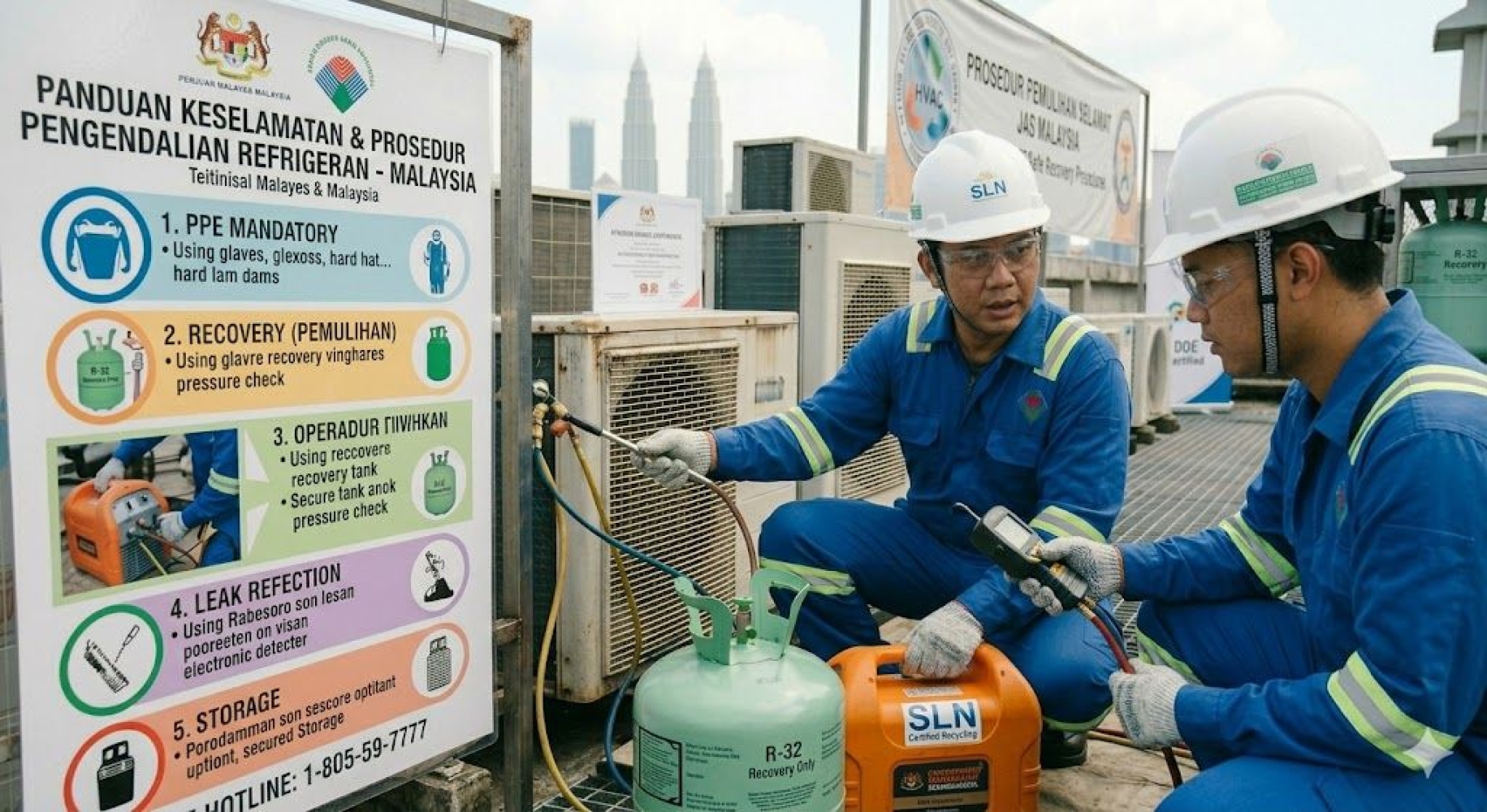
refrigerant safe recycling procedures Malaysia
Specifications
Details
Refrigerant Safe Recycling Procedures Malaysia: Environmental HVAC Standards for Sustainable Refrigerant Reuse and Compliance
Refrigerant safe recycling procedures Malaysia refer to the standardized technical processes, environmental regulations, and safety guidelines used to clean, process, and reuse recovered refrigerants within Malaysia’s heating, ventilation, air conditioning, and refrigeration (HVACR) industry. These procedures are essential for reducing environmental pollution, improving resource efficiency, and ensuring compliance with national environmental laws. They are enforced under the regulatory framework of the Department of Environment Malaysia, also known as Jabatan Alam Sekitar (JAS), which oversees refrigerant emissions control and promotes sustainable HVAC practices across Malaysia.
The primary objective of refrigerant safe recycling procedures Malaysia is to ensure that recovered refrigerants from HVAC systems are properly processed to remove impurities such as oil, moisture, acids, and particulate matter before being reused. Refrigerants are widely used in residential, commercial, and industrial applications such as air conditioning units, chillers, cold storage facilities, supermarkets, hospitals, hotels, and manufacturing plants. Without proper recycling, refrigerants can become contaminated and unsafe for reuse, leading to reduced system efficiency, equipment damage, and increased environmental impact.
A key component of refrigerant safe recycling procedures Malaysia is the use of approved refrigerant recycling equipment. Technicians must operate certified machines designed to purify refrigerants by filtering contaminants and restoring them to acceptable quality standards. These machines ensure that recycled refrigerants meet required performance levels for reuse in compatible HVAC systems while minimizing environmental harm.
Another important aspect is refrigerant identification and segregation before recycling. Different refrigerant types must be properly identified and separated to avoid cross-contamination. Mixing incompatible refrigerants can lead to system failure, safety risks, and reduced efficiency. Proper classification ensures that each refrigerant is processed according to its chemical properties and environmental classification, including low-GWP and high-GWP categories.
Systematic testing and quality control are also essential elements of refrigerant safe recycling procedures Malaysia. After recycling, refrigerants must undergo quality checks to ensure they meet purity and performance standards. This includes verifying moisture content, acidity levels, and overall chemical stability. Only refrigerants that meet approved standards can be reused in HVAC systems, ensuring safe and efficient operation.
Environmental compliance is a major requirement under refrigerant safe recycling procedures Malaysia. HVAC technicians and service providers must maintain detailed documentation of all recycling activities, including refrigerant types, quantities processed, equipment used, and final usage records. Proper record-keeping ensures transparency and allows regulatory authorities to verify compliance with DOE Malaysia environmental standards. These records are essential for inspections, audits, and enforcement of environmental protection regulations.
Workplace safety is another core pillar of refrigerant recycling procedures. Technicians must follow strict safety protocols when handling recovered refrigerants and operating recycling equipment. This includes hazard identification, risk assessment, proper use of personal protective equipment (PPE), and safe operation of machinery. These measures help prevent accidents, exposure risks, and equipment damage during recycling operations.
Energy efficiency is a significant benefit of refrigerant recycling. Properly recycled refrigerants improve HVAC system performance, reduce energy consumption, and lower operational costs. This supports Malaysia’s national energy efficiency goals and contributes to long-term environmental sustainability by reducing the need for newly manufactured refrigerants.
As HVAC technologies advance, modern systems increasingly use low-GWP refrigerants that require precise recycling techniques. Refrigerant safe recycling procedures Malaysia ensure that technicians are trained to handle both traditional and modern refrigerants responsibly, supporting the transition toward greener HVAC solutions and circular economy practices.
Continuous training and certification are essential to maintain compliance with evolving environmental regulations and industry standards. The HVACR industry is rapidly advancing, and ongoing education ensures technicians remain competent, compliant, and environmentally responsible.
At Eakon Academy, HVAC professionals can enhance their expertise through structured training programs focused on refrigerant safe recycling procedures Malaysia standards. These courses cover recycling techniques, equipment operation, environmental compliance, refrigerant classification, and workplace safety. By mastering these procedures, technicians gain professional recognition, improved career opportunities, and the technical expertise required to support Malaysia’s environmental sustainability objectives. Refrigerant safe recycling procedures Malaysia are essential for building a safe, compliant, and environmentally responsible HVAC industry in Malaysia.
View more about refrigerant safe recycling procedures Malaysia on main site