
Details
R290 ULTRASONIC LEAK DETECTION FOR ADVANCED AND PRECISE HVAC-R REFRIGERANT SAFETY MONITORING
R290 ultrasonic leak detection is an advanced and highly effective method used in modern HVAC-R systems to identify refrigerant leaks in equipment that utilizes propane (R290) as a natural refrigerant. As the HVAC industry increasingly shifts toward environmentally friendly refrigerants with low global warming potential (GWP), R290 has become a preferred solution due to its high energy efficiency and sustainability benefits. However, because R290 is highly flammable, accurate and reliable leak detection is essential to ensure safety, prevent hazards, and maintain system performance. Ultrasonic leak detection provides a powerful solution by identifying leaks through sound-based technology rather than gas concentration alone. At eakonacadem.edu.my, we focus on providing professional HVAC education and technical training that supports the correct use of R290 ultrasonic leak detection techniques in real-world applications.
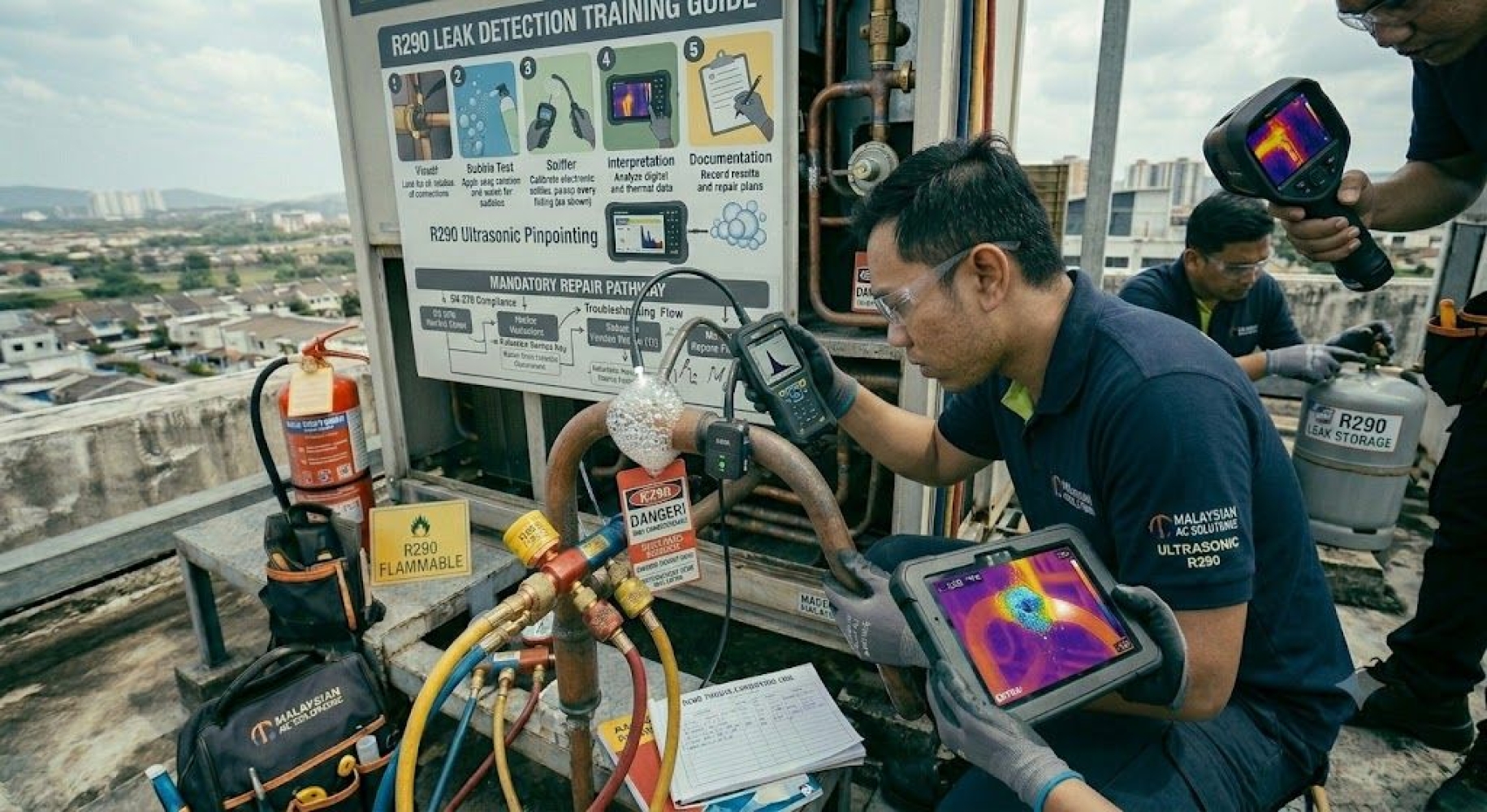
R290 ultrasonic leak detection works by capturing high-frequency sound waves produced when pressurized refrigerant gas escapes from a system. When a leak occurs, the escaping R290 gas generates ultrasonic noise that is beyond the range of human hearing. Specialized ultrasonic detectors are designed to pick up these high-frequency signals and convert them into audible sounds or visual indicators that technicians can interpret. This allows for rapid identification of leak locations even before gas concentration levels become dangerously high.
One of the key advantages of R290 ultrasonic leak detection is its ability to function effectively in noisy industrial environments. Unlike traditional gas detectors that rely on sensing airborne refrigerant concentration, ultrasonic detectors focus on sound signatures. This makes them highly effective in environments such as manufacturing plants, cold storage facilities, and large commercial HVAC systems where background noise can interfere with other detection methods. As a result, ultrasonic technology provides a reliable alternative or complementary solution for comprehensive leak detection.
Another important benefit of R290 ultrasonic leak detection is its ability to detect leaks at an early stage. Because it identifies the sound of escaping gas rather than waiting for gas accumulation, it can detect leaks immediately as they occur. This early detection capability helps prevent refrigerant loss, reduces safety risks, and minimizes potential damage to HVAC systems. Early identification of leaks is especially important when working with flammable refrigerants like R290, where safety is a top priority.
R290 ultrasonic leak detection is also highly versatile and can be used across a wide range of HVAC applications. Technicians can use handheld ultrasonic devices to inspect specific components such as compressors, valves, pipe joints, and heat exchangers. These portable tools allow for targeted inspections and are particularly useful during maintenance and troubleshooting procedures. Fixed ultrasonic monitoring systems are also available for continuous surveillance in critical HVAC installations.
In addition to its technical advantages, ultrasonic leak detection is a non-invasive method. It does not require direct contact with refrigerant or system components, making it safe and efficient for routine inspections. This reduces downtime during maintenance and allows HVAC systems to remain operational while inspections are carried out.
At eakonacadem.edu.my, we emphasize the importance of training HVAC professionals in R290 ultrasonic leak detection techniques. Proper training ensures that technicians understand how to operate ultrasonic equipment, interpret acoustic signals, and integrate this method with other leak detection technologies such as electronic and infrared systems. Skilled technicians are essential for maintaining safe and efficient HVAC operations involving flammable refrigerants.
Furthermore, the use of ultrasonic leak detection contributes to environmental sustainability by reducing refrigerant emissions and improving system efficiency. Early detection of leaks helps prevent gas loss, reduce energy consumption, and extend equipment lifespan. This supports global efforts to adopt greener and more responsible HVAC practices.
In conclusion, R290 ultrasonic leak detection is a powerful and advanced method for ensuring the safety and reliability of HVAC-R systems using propane refrigerants. By detecting high-frequency sound waves from escaping gas, it provides early, accurate, and non-invasive leak identification. When combined with proper training and other detection technologies, it significantly enhances system safety, efficiency, and environmental responsibility, making it an essential focus area for HVAC education and training platforms like eakonacadem.edu.my.
View more about R290 ultrasonic leak detection on main site